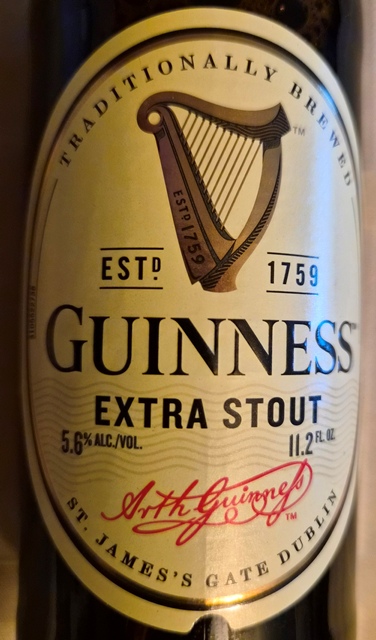
This year's Bloomsday has seen a few changes. Sadly, Magner's Irish Cider is no longer distributed to Flagstaff in bottles or cans. However, a few places still sell it on tap. Also, the old-fashioned carbonated Guinness Extra Stout has changed. Until recently, the version sold at stores had this label:
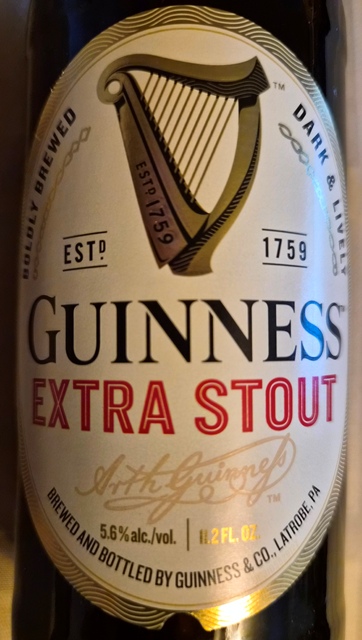
Starting a few months ago, most stores now sell a different version, brewed not in Dublin but in Latrobe, PA at the former Rolling Rock brewery (which in turn is now brewed in New Jersey):
When I visited the Guinness brewery in Dublin in 2009, they stated that only three breweries (in Dublin, Africa, and Asia) actually brewed Guinness Stout. The unfermented wort was then transported in tanks to various countries for fermentation and bottling. North America's source was Dublin. Since then, apparently, the practice has changed, and brewing itself increasingly has been contracted out.
Flagstaff Liquor still sells the Dublin version (at least for now), and I thought I would do a side-by-side taste test.
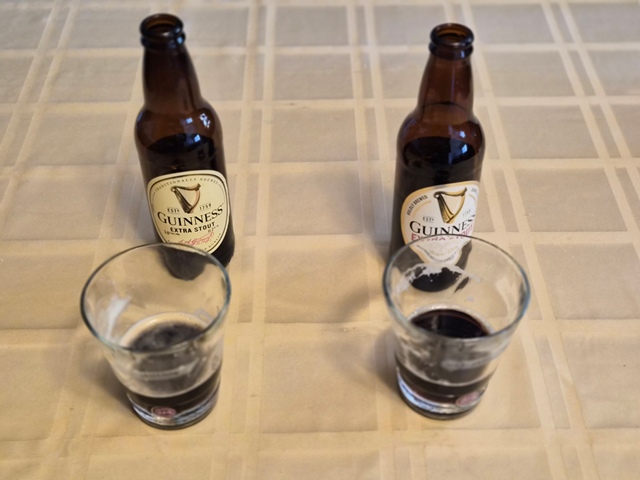
Well, I was really hoping that I couldn't tell the difference, but I failed. The Dublin version is sweeter, smoother, and more complex, while the Latrobe version is more bitter and empty. It's definitely a different recipe, and I can't help but be reminded of the "New Coke" scandal of the 80's.
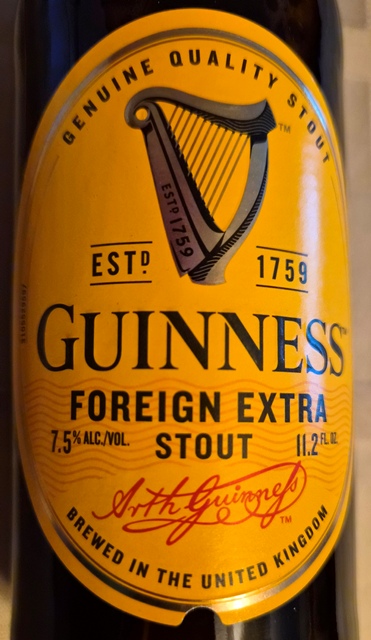
Flagstaff Liquor also sells "Foreign Extra Stout," which is stronger than the Extra Stout but is more expensive. Until recently, the version sold here was also brewed in Dublin, but as of now is brewed in the UK:
The nitrogenated Draught Stout is still brewed in Dublin:
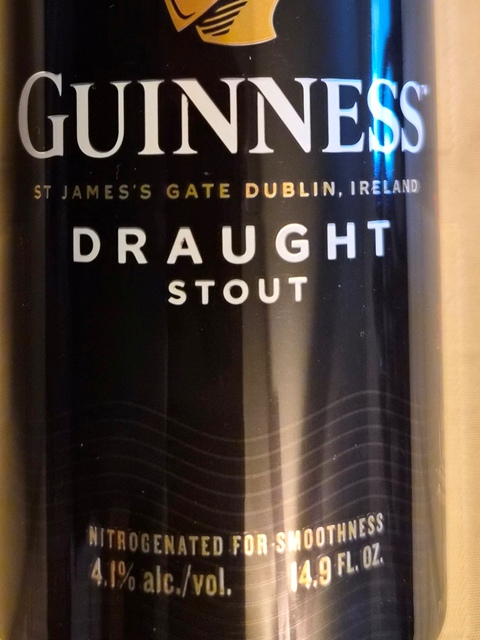
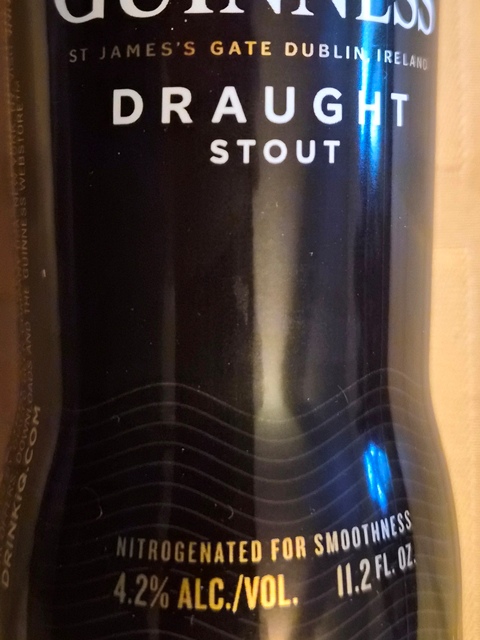
As long as I was at it, I thought I'd compare them as well. While they are very close, I would say the canned version is somewhat smoother, while the bottled version is slightly more bitter. Nonetheless, both are considerably less satisfying than even the domestic Extra Stout, and I would tend to avoid them altogether.
All in all, I'm inclined to buy the Dublin Extra Stout while I can, and occasionally the Foreign Extra Stout as a special treat. I wouldn't say that the domestic Extra Stout is downright bad, but it is somewhat disappointing.
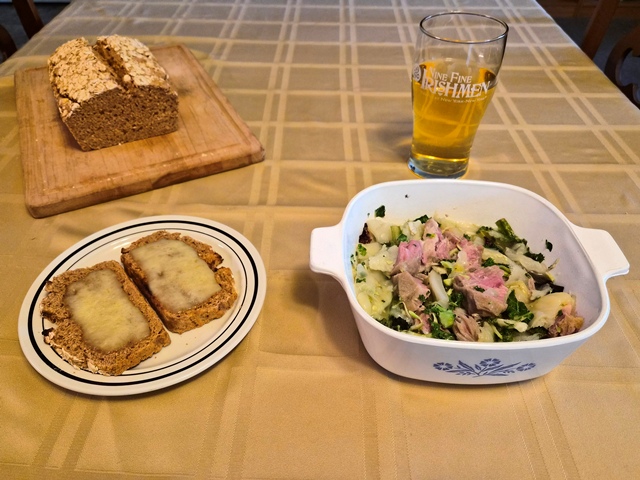
In Ireland, the term "bacon" typically refers to "boiling bacon," which is made the same way as corned beef except using pork shoulder. ["Back bacon," sliced thin and fried for breakfast, is typically referred to as "rashers."] I cure my own corned beef and bacon using a simple recipe* adapted from Joy of Cooking. This year I made a batch of bacon and cabbage for St. Patrick's Day (which in Ireland is more traditional than corned beef and cabbage), but reserved a portion in the freezer for Bloomsday. Because cabbage tends to disintegrate after freezing, I added some fresh greens.
Last April, when was in the valley, I stopped at Fibber Magees, my favorite Irish pub, for their full breakfast. While I finally found a definitive source for black and white puddings a few years ago (Tommy Moloney's), I never got around to looking for a recipe for traditional brown bread. After browsing through several recipes online, many of which seemed too complicated, I finally decided to try this one.
Put together, here is the result, served with Ace pear cider:
And that's it for this year!
————
*Here it is:
Mix:
2 quarts hot water
1 cup coarse sea salt
1 tbsp pickling spice

Let cool and pour over:
Beef brisket (or pork shoulder roast for Irish bacon)
Add 3 or more cloves of garlic

Cure in refrigerator for at least 3 weeks
Turn every 5 days
———
June 16, 2026.